
Saudi cultural sector draws $500m FDI with 1,700 foreign investors
RIYADH: According to one of the Kingdom’s top ministers, the cultural industry in Saudi Arabia has drawn 1,700 non-Saudi investors and $500 million in international investment.
Saudi Arabia’s efforts to become a global cultural centre are accelerating, according to Minister of Investment Khalid Al-Falih, who spoke at the first Cultural Investment Conference in Riyadh.
“There are currently more than 50,000 investors in the Kingdom of Saudi Arabia, both domestic and foreign, who are classified as investors in the cultural and creative sectors,” he stated.
In the opening panel of the conference, moderated by Faisal J. Abbas, Editor-in-Chief of Arab News, the minister described the cultural economy’s explosive expansion.
“As of last year, we had over $500 million in foreign investments in culture, so it is growing at double digits, and I can tell you from nothing six, seven years ago,” he said.
“I’m happy to say that we have 1,700 international investors that are investing in culture, creative, arts, events, entertainment, and all of the things that we classify under this very broad definition of culture,” he added, indicating that a sizable portion of this investment is coming from overseas.
Al-Falih highlights surge in cultural investments
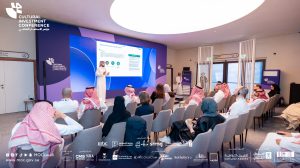
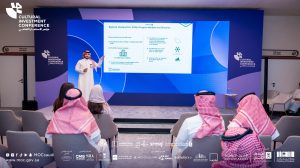
Investors, cultural leaders, and decision-makers from all around the world attended the conference, which was hosted by the Ministry of Culture at the King Fahd Cultural Centre.
As a fundamental component of the Saudi Vision 2030 economic diversification strategy, the event seeks to establish the Kingdom as a premier location for cultural investment.
The cultural investment, according to Minister Al-Falih, is crucial to the country’s charm and identity. “You are a no-country if you lack a soul as a nation and as a culture.
He said, “Riyadh and the Kingdom has become a cultural hub,” citing the upcoming Riyadh Season event as an excellent illustration. “Nobody will want to come and visit,” he remarked.
The Quality of Life Program of Saudi Vision 2030, which aims to improve entertainment, cultural offerings, and general liveability for inhabitants and residents, includes this drive as a key element.
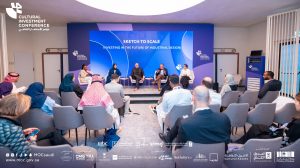
Saudi Arabia’s minister of economy and planning, Faisal Alibrahim, echoed this opinion by underscoring the sector’s strategic importance.
“This is crucial for the Kingdom of Saudi Arabia’s initial economic diversification wave that we saw,” Alibrahim stated.
According to him, the cultural sector currently employs about 235,000 people, and by 2030, it is expected to quadruple its economic contribution, largely due to exports.
The two ministers presented a cooperative growth approach. Al-Falih explained a targeted strategy for establishing a triangle that includes civil society as a third category in addition to investor investment, government assistance, and government direct participation in the industry.
He pointed out that 40 distinct investment possibilities in the area have already been created by the Ministry of Investment and are available on the Invest Saudi website.
Spending on culture was “equally as important as, and maybe even more important than” standard budget items during the early years of Vision 2030, according to Minister Alibrahim.
“People remember generosity, and today are seeing an increase in the quality of the user experience when you interact with the Kingdom,” he continued, relating cultural growth to the Kingdom’s international standing.
The minister emphasised the need for entrepreneurs in the culture industry, not just big businesses. He gave the example of South Korea, whose quick diversification resulted in a surge in cultural exports, a tactic of soft power that even encouraged Saudis to pick up the language.
According to data from the Bank of Korea, the nation’s exports of intellectual property, such as games, films, and music, more than tripled in the past ten years, reaching $9.85 billion in 2024.
A major step in Saudi Arabia’s plan to boost its cultural footprint globally and enable its cultural sector as a dynamic economic engine is the two-day Cultural Investment Conference, which includes more than 38 panel talks.
SOURCE: Arab News
Note: Pictures are taken from the Saudi Ministry of Culture