
US Critical Minerals Stockpile: Project Vault and Efforts to Reduce Dependence on China
Introduction
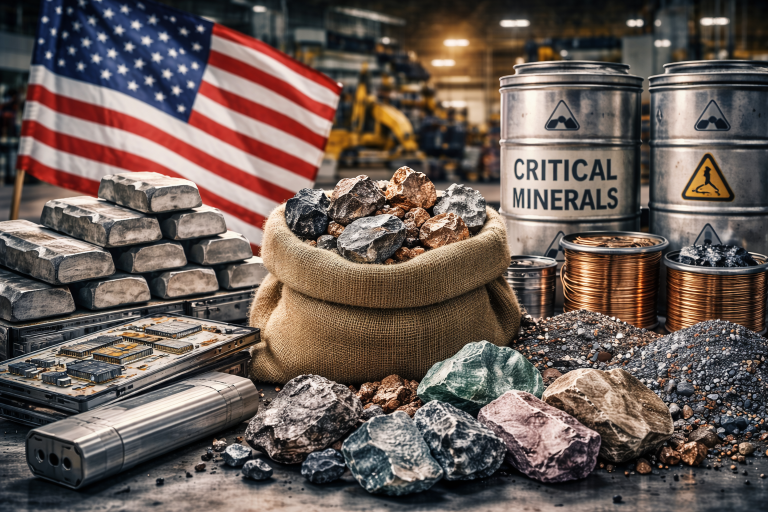
The US critical minerals stockpile and efforts to reduce dependence on China have taken a major step forward with the announcement of Project Vault.
President Donald Trump said the stockpile is intended to “ensure that American businesses and workers are never harmed by any shortage,” signaling a strategic push to secure the raw materials needed for modern technology and clean energy.
Rare-earth minerals, used in semiconductors, electric vehicles, and smartphones, have become central to the country’s industrial and security priorities, especially as global supply chains face geopolitical pressures.
 Background: What Is the US Critical Minerals Stockpile?
Project Vault combines $2 billion in private capital with a $10 billion loan from the US Export-Import Bank to create a strategic reserve of critical minerals.
The move is part of a broader effort to regain control over the production and supply of essential materials, which the US has historically relied on other countries, particularly China, for.
The Trump administration has invested directly in companies involved in rare-earth minerals and critical metals.
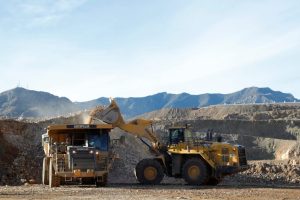
Notable investments include a 10 percent stake in USA Rare Earth, plans for a $7.4 billion zinc smelter with Korea Zinc, and support for Lithium Americas’ Thacker Pass lithium mine.
Other major moves include stakes in MP Materials, Intel, and Trilogy Metals, all aimed at boosting domestic production capacity.
Read: Why It Matters
These efforts highlight the importance of controlling critical minerals for national security, economic stability, and technological leadership.
By investing in mining, processing, and production facilities domestically, the US aims to reduce vulnerabilities caused by overreliance on China, which dominates global rare-earth markets.
Experts warn that without such measures, supply chain disruptions could have far-reaching consequences for American businesses and defense capabilities.
 Analysis
The approach of buying equity stakes in major companies is unusual for the US, but not unprecedented. Historical examples include the 2008 financial crisis interventions under TARP, which saw the government acquire stakes in GM, Chrysler, and AIG.
However, Project Vault differs because it is proactive rather than a reactive bailout. The goal is long-term control over essential resources rather than temporary stabilization.
Political reactions have been mixed. Some progressives, like Senator Bernie Sanders, support the approach as a way to protect taxpayers and ensure strategic autonomy.
Some conservatives, like Senator Rand Paul, criticize it as a step toward socialism. Analysts emphasize that the initiative is less about ideology and more about securing supply chains critical to national interests.
The US critical minerals stockpile also reflects the growing global competition for resources. China produces nearly 90 percent of processed rare-earth minerals, creating a chokepoint that can influence foreign policy and international trade.
By developing domestic capacity, the US aims to create resilience and independence while fostering a market-driven approach.
 Recommendations
To maximize the impact of Project Vault, policymakers should:
Strengthen partnerships between government and private investors to accelerate production timelines.
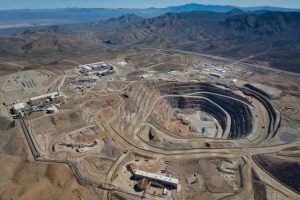
Support research and development to improve extraction, refining, and recycling technologies for critical minerals.
Monitor environmental and social impacts to ensure responsible mining practices.
Coordinate with allies to diversify supply chains and reduce single-country dependency.
Increase transparency and accountability in equity investments to ensure returns for taxpayers.
Way Forward
Looking ahead, the US critical minerals stockpile could serve as a blueprint for securing other strategic resources. Investments in domestic production, coupled with partnerships with allies, can reduce reliance on China and strengthen national security.
Continued monitoring of global markets, innovation in mineral processing, and strategic public-private collaboration will be key to the stockpile’s long-term success.
By securing critical minerals and supporting domestic production, the US is taking a proactive stance to safeguard technology, industry, and national security for the coming decades.
 Conclusion
Project Vault and the US critical minerals stockpile mark a significant effort to reduce dependence on China while boosting domestic resilience.
With targeted investments, strategic planning, and collaboration between public and private sectors, the initiative aims to ensure that American businesses, workers, and national interests remain protected against future supply chain disruptions.