
Pakistan to Double Manpower Exports to Saudi Arabia After Defense Pact
Following a historic defence agreement, Pakistan intends to quadruple its exports of labour to Saudi Arabia. ISLAMABAD Following the signing of a historic defence agreement between the two nations last month, Pakistan intends to treble its exports of labour to Saudi Arabia, officials told Arab News on Monday.
The Bureau of Emigration & Overseas Employment (BEOE) reports that over the previous five years, the nation’s exports of human resources to Saudi Arabia have already increased steadily.
Between 2020 and 2024, Pakistan exported 1.88 million workers to Saudi Arabia, a 21 percent increase from 1.56 million in 2015–2019.The consistent demand for Pakistani labour was reflected in the Kingdom’s remittances, which increased from $7.39 billion in 2020 to $8.59 billion in 2024.
According to the State Bank of Pakistan (SBP), inflows from Qatar stayed below $1 billion per year, whereas those from the United Arab Emirates varied between $5.8 billion and $6.8 billion over the same time period.
Both nations inked a historic defence agreement in September that aims to strengthen decades of military and security cooperation and strengthen joint deterrence.
Leading Pakistani government figures, such as National Food Security Minister Rana Tanveer, have stated that, in addition to the defence agreement, Islamabad and Riyadh will sign a comprehensive economic agreement.
The defence contract between Saudi Arabia and Pakistan will significantly affect the export of labour. We aim to treble the current average export of half a million workers annually to one million starting next year,” stated Gul Akbar, a senior director at the BEOE.
According to the source, the BEOE is collaborating with representatives of Pakistan’s Special Investment Facilitation Council (SIFC), a civil-military organisation established to encourage investment, especially from the Middle East, to make it feasible through a variety of measures.
In future encounters, their Pakistani counterparts will provide the text to Saudi officials. A high-level committee made up of ministers and officials was established by the Pakistani government on Sunday to supervise bilateral economic interactions and discussions with Saudi Arabia (KSA).
According to Akbar, Pakistan has suggested establishing technical training facilities in both nations to raise the employability and skill certification of the local labour force.
He continued, “We are also proposing an e-visa system for Pakistani workers.” According to the State Bank of Pakistan (SBP), the Kingdom continues to be the most popular destination for Pakistani workers and the largest source of remittances, which totalled $736.7 million in August out of a total inflow of $3.1 billion.
Analysts attribute the increase in Pakistani workers’ travel to Saudi Arabia to the Kingdom’s ongoing Vision 2030 development projects, which they claim have increased demand for qualified and semi-skilled international workers.
As the Kingdom builds massive stadiums, transport systems, and hospitality facilities, Saudi Arabia’s hosting of the 2034 FIFA World Cup is increasing demand for international workers.
As labour dynamics in the Gulf area changed, Pakistan’s exports of human resources to the UAE fell precipitously from 2020 to 2024, from 1.32 million to 463,000, a 65 percent decrease, while Qatar more than quadrupled its intake from 74,000 to 170,000 Pakistani workers.
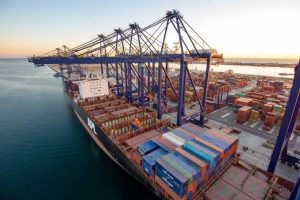
The National Vocational and Technical Training Commission (NAVTTC) of Pakistan has worked with Takamol, a Pakistani skill verification program, to certify workers in 62 skilled categories, ranging from technical services to construction, in order to address Saudi Arabia’s labour demands.
Ahmad, CEO of M.Pak Makkah Manpower Services, told Arab News that his company sent 2,000 employees to Saudi Arabia this year alone. He noted a rising need for delivery drivers and medical personnel, saying, “As both countries deepen cooperation, the defence pact has boosted Saudi employers’ confidence in Pakistani workers.”
Akbar referred to working abroad as a “national achievement” and downplayed worries about “brain drain.” He went on to say that Pakistan’s excess labour should be viewed as a financial asset that contributes knowledge, technical skills, and remittances home.
Pakistan’s external finances continue to be anchored by remittances, which supply hard currency that boosts household spending, reduces the current-account deficit, and fortifies foreign exchange reserves.
The country’s $7 billion International Monetary Fund (IMF) loan program was surpassed by $38.3 billion in worker remittances in the most recent fiscal year, a rise of $8 billion from the year before.
SOURCE: ARAB News