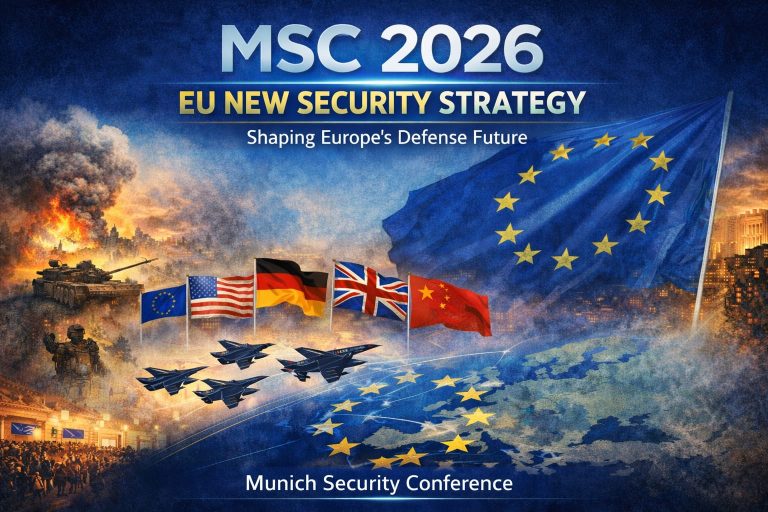

EU New Security Strategy Takes Center Stage at MSC 2026
The EU new security strategy dominated discussions at the Munich Security Conference, where European leaders gathered amid rising global tension and uncertainty in trans Atlantic ties.
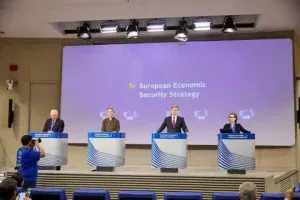
EU foreign policy chief Kaja Kallas said she is drafting the strategy together with European Commission President Ursula von der Leyen. The plan, she explained, will address all dimensions of European security in what she described as a more hostile geopolitical era.
Kallas made it clear that Europe must take greater responsibility for its own defense. She warned that Russia’s long term goals extend beyond eastern Ukraine and said Europe cannot respond with half measures.
Ukraine War Remains at the Core
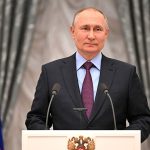
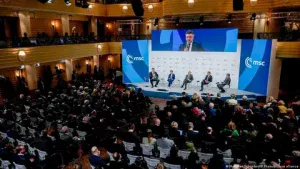
Security concerns remain closely tied to the war in Ukraine. Ukrainian President Volodymyr Zelenskyy called for sustained pressure on Moscow and stronger air defense support. He described Russian President Vladimir Putin as driven by conflict and urged allies to tighten sanctions.
Kallas echoed that urgency, stating that Russia’s demands cannot be met with a weak response. For many leaders at the conference, Ukraine’s security is inseparable from Europe’s own stability.
Strained but Ongoing US Europe Dialogue
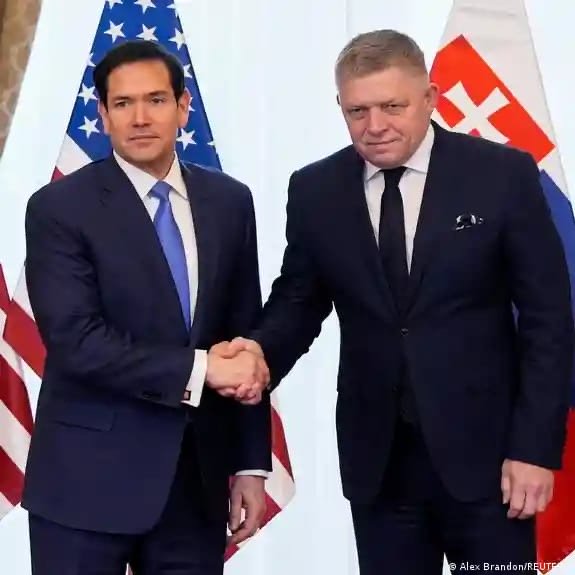
The conference also highlighted shifting dynamics with the United States under President Donald Trump. US Secretary of State Marco Rubio delivered a calmer message compared to last year’s tone, saying the US and Europe belong together. At the same time, he repeated criticism of Europe’s migration and climate policies.
Kallas pushed back firmly, rejecting suggestions that Europe is in decline. She argued that the European project remains strong, even if reform is needed.
Germany and Major Powers Rebalance Ties
German Chancellor Friedrich Merz called for renewed trust between Europe and Washington but signaled openness to stronger ties with other global players. China’s Foreign Minister Wang Yi defended multilateral cooperation and called for closer economic relations with Germany.
Meanwhile, UK Prime Minister Keir Starmer stressed the need for tighter UK EU defense cooperation, showing that security collaboration extends beyond formal EU membership.
Call for a More United European Defense
A key message from Kallas was the need to move beyond narrow national defense planning. She urged member states to think in European terms rather than purely national ones.
Latvian President Edgars Rinkevics supported this view, pointing to practical barriers that still slow military coordination across EU borders.
Several leaders argued that without smoother cooperation and shared planning, Europe risks weakening its own deterrence.
Europe at a Turning Point
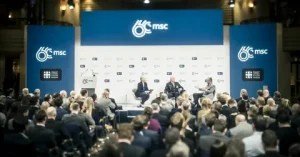
European Central Bank President Christine Lagarde said external pressure often pushes Europe to act with greater unity. That sense of urgency was visible throughout the conference.
By the end of MSC 2026, one conclusion stood out. The EU new security strategy marks a shift toward deeper defense coordination and stronger political alignment. Whether it succeeds will depend on how willing member states are to act together in a rapidly changing world.