
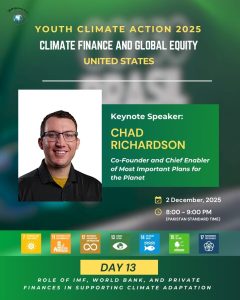
Climate Finance and Global Equity How IMF World Bank and the United States Can Support Developing Countries
Climate Finance and Global Equity: Why Developing Countries Need Fair Access to Funds
Climate finance has become one of the most critical issues in global development. As climate disasters intensify, developing countries face severe losses while having the least resources to respond.
Achieving global equity requires ensuring that climate finance is distributed fairly, efficiently and without creating new debt burdens. Three powerful actors shape this system: the IMF, the World Bank and the United States.
The Funding Gap for Developing Countries:
Countries in Africa, South Asia, Latin America and Small Island States need billions every year to build climate resilience, shift to clean energy and recover from extreme weather events.
However, they often lack affordable financing. Many are already struggling with debt, and climate projects require long term investment they simply cannot afford without international support.
IMF and Fair Climate Finance Access:
The IMF plays a major role through its Resilience and Sustainability Trust, created to help climate vulnerable economies. While promising, the fund remains limited and mostly loan based.
To ensure fairness, the IMF must increase grant based support, reduce strict conditions and make climate financing accessible without adding debt pressure on already fragile economies.
World Bank and Climate Development:
The World Bank is the largest provider of development financing for climate projects. It funds renewable energy, water security, disaster management and climate smart agriculture.
Yet its procedures remain complex, and risk based lending often excludes the poorest countries. A reformed World Bank must expand concessional loans, simplify access and prioritize the regions suffering the most from climate change.

United States and Global Climate Responsibility:
The United States, as a major global economy and influential leader in both institutions, shapes the direction of climate finance.
Consistent and increased US contributions are essential to support vulnerable countries and close the global financing gap.
Conclusion:
Achieving global equity depends on fair distribution of climate funds. Without accessible, predictable and sufficient support, developing countries cannot adapt or build a resilient future.