
Centrist Paz Wins Bolivia’s Presidential Election
Bolivia: Paz, a centrist, is elected president The economically troubled South American country will be led by a centre-right capitalist for the first time in 20 years.
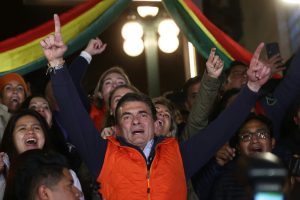
Following two decades of one-party rule by the communist Movement Towards Socialism (MAS) party, Bolivians chose a pro-business centre-right senator as their new president on Sunday.
In the runoff election, Rodrigo Paz defeated his opponent, right-wing former interim president Jorge “Tuto” Quiroga, by 54.6% to 45.4%.
According to Paz’s triumphal address, his nation was “reclaiming its place on the international stage.” The 58-year-old economist who is now a senator went on to say, “We must open Bolivia to the world and restore its role.”
Bolivia’s worst economic crisis in decades has been caused by a lack of US dollars since 2023, which has hindered imports and kept Bolivians out of their savings accounts.
In the meantime, the Boliviano, the country’s currency, has lost over half of its value. Inflation reached 23% last month, the highest level since 1991.
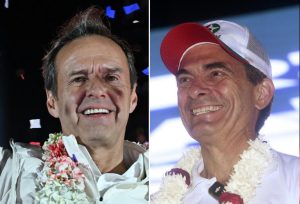
What promises have Bolivia’s presidential candidates made? Both Quiroga and Paz made an effort to portray themselves as change agents who would steer the nation away from two decades of economic populism.
The election follows the August 17 election in which MAS, which was formed by former President Evo Morales, was voted out of office.
Voters’ annoyance with both national fuel shortages and party infighting was perceived as reflected in the outcome.
Along with significant spending cutbacks, a reduction in the size of the government, and the privatisation of state-owned businesses, Quiroga has suggested obtaining a speedy loan from the International Monetary Fund (IMF).
In order to evade IMF assistance, Paz plans to combat corruption and the nation’s growing illicit market while gradually eliminating government gasoline subsidies rather than cutting them all at once.
According to economists, if welfare programs continue, the budget cannot be balanced. As they stabilise Bolivia’s economy, Quiroga and Paz have stated their desire to keep social welfare programs in place, something experts say is impossible to accomplish simultaneously.
Both also concurred that the key to Bolivia’s economic survival is the elimination of gasoline subsidies, which generate over $2 billion (€1.72 billion) in government revenue annually.
However, they also understand how challenging that will be, as trade unions and citizens are already predicting disruption if the fuel subsidies are touched.
Bolivia became extremely wealthy in the early 2000s because to gas, but since then, exploration and production have stopped.
Exploiting its enormous lithium deposits—the greatest in the world—will be Bolivia’s next chance to alter its economic course.
Who is Paz? Paz, a relative unknown despite 20 years in politics and the son of a former president, shocked onlookers by winning the August election.
The run-off was necessary because, despite defeating Quiroga and every other candidate, he was unable to obtain an absolute majority.
Paz’s running mate Edmand Lara, who lost his police position after a TikTok video of him ranting against corruption went viral, was largely responsible for his popularity in the voting.
Working-class Bolivians living in the highlands were among those drawn to his message. Throughout their campaign, Paz and Lara raised money all around the nation by claiming “capitalism for all” and contrasting themselves with Quiroga and his well-off backers.
How will Bolivia’s alliances be affected by the election? After 20 years of anti-American MAS leadership, both candidates have made overtures to the US, travelling to Washington to meet with President Donald Trump.
In a press conference Tuesday, US Secretary of State Marco Rubio stated, “Both candidates running in the runoff election want strong and better relations with the United States, so that’s another transformative opportunity,” as Trump welcomed close ally Argentine President Javier Milei and later gave him a $20 billion (€17.1 billion) loan.
SOURCE: DW News