
Quebec mosque attack anniversary and rising Islamophobia in Canada
Introduction
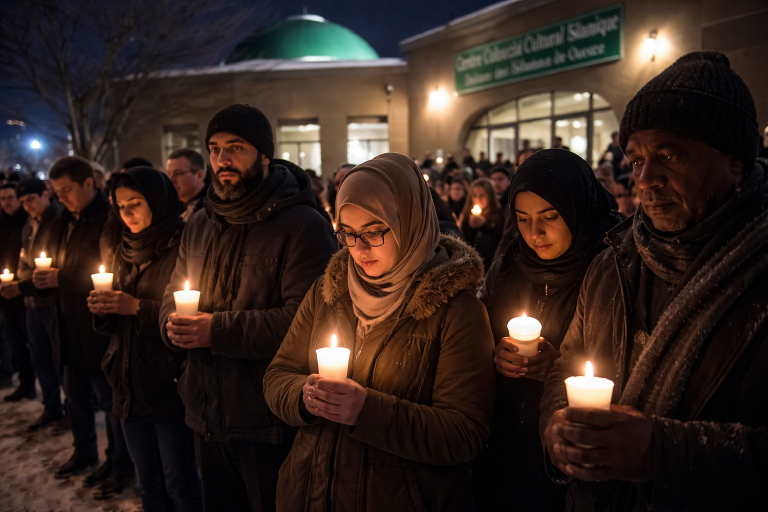
Nine years after the deadly Quebec City mosque shooting, Canadian Muslim leaders are again urging the country to confront Islamophobia and stop harmful rhetoric. The anniversary is not only a moment of remembrance but also a warning.
Community voices say anti Muslim hate is still present in public life and politics, and that ignoring it could allow history to repeat itself. As Canada reflects on the tragedy, many are asking whether enough has truly changed since 2017.
Background and Context
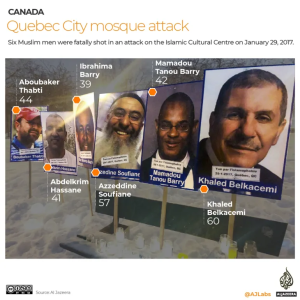
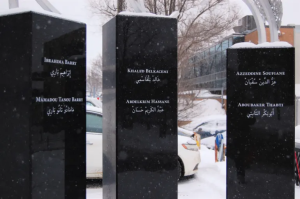
On January 29, 2017, a gunman opened fire at the Quebec Islamic Cultural Centre in Quebec City, killing six Muslim men and injuring several others. The attack became the deadliest assault on a place of worship in Canadian history.
It shocked the nation and led to widespread vigils, policy discussions, and promises from leaders to fight hate and discrimination.
In 2021, Canada officially marked January 29 as the National Day of Remembrance of the Quebec City Mosque Attack and Action against Islamophobia.
While this step aimed to honor victims and promote unity, many Muslim leaders now question whether the lessons from that tragedy are being fully remembered or applied in today’s political and social climate.

Read and Reflect
The anniversary has become a moment for Canadians to reflect on the real impact of hate. Leaders from the National Council of Canadian Muslims stress that Islamophobia is not harmless speech but something that can lead to real world violence.
The emotional weight of the anniversary reminds families and communities that words and policies have consequences. For many Muslims in Quebec and across Canada, it is a painful reminder that safety and acceptance are still ongoing struggles.
Analysis
Recent debates around laws and political messaging in Quebec have raised concerns among human rights advocates. Measures linked to state secularism, such as restrictions on religious symbols worn by public servants, have been criticized for affecting Muslim women and other minorities more heavily.
Critics argue that such policies can shape public attitudes and create an environment where visible religious communities feel targeted.
At the same time, federal efforts to combat hate show that the issue remains on the national agenda. Canada’s Action Plan on Combatting Hate and the appointment of a special representative on Islamophobia signal a commitment to change.
Yet rising hate crime numbers suggest that policy alone cannot solve deep social divisions. The tension between public policy, public opinion, and lived experiences shows how complex the issue has become.
Rising Hate and Social Impact
Data from Statistics Canada reveals a worrying trend. Anti Muslim hate crimes have increased significantly in recent years, showing that discrimination and hostility remain serious problems.
Many Muslims report facing bias at work, in schools, and in public spaces. These experiences create fear and isolation, making it harder for communities to feel fully included in Canadian society.
The rise of extremist narratives and political polarization has also fueled division. When negative stereotypes are repeated in media or political debates, they can reinforce suspicion and mistrust. This environment makes it harder to build understanding between communities.
Recommendations
Experts and community leaders believe that stronger public education is essential. Schools, media outlets, and public institutions must work together to promote awareness about Islamophobia and religious diversity.
Inclusive dialogue that encourages people to listen to Muslim voices can help challenge stereotypes and build empathy.
Government policies also need careful review to ensure they do not unintentionally marginalize minorities. Transparent discussions around secularism, rights, and equality are necessary to create laws that respect both shared values and individual freedoms.
Community based programs that encourage cooperation between different faith groups can also play a powerful role in reducing fear and misunderstanding.
Way Forward
Moving forward requires more than remembrance ceremonies. It calls for active participation from citizens, leaders, and institutions. Communities must continue speaking out against hate speech and discrimination wherever it appears.
Media organizations can help by presenting balanced narratives that highlight the contributions of Muslim Canadians rather than reinforcing negative stereotypes.
Support systems for victims of hate crimes also need strengthening so individuals feel safe reporting incidents. Encouraging dialogue across cultural and religious lines can foster trust and reduce division.
By promoting mutual respect and understanding, Canada can work toward a future where tragedies like the Quebec City mosque attack never happen again.
Conclusion
The ninth anniversary of the Quebec City mosque shooting is both a moment of mourning and a call to action. While Canada has taken steps to address Islamophobia, rising hate crimes and ongoing debates around laws show that the work is far from complete.
Remembering the victims means more than honoring their memory. It means building a society where diversity is respected, voices are heard, and no community lives in fear.