

Germany’s First Industrial AI Cloud and Europe’s Digital Sovereignty Push
Introduction
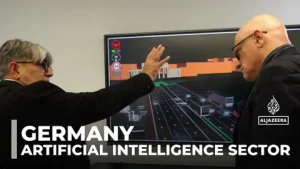
Germany has opened one of Europe’s largest AI computing hubs in Munich, called the Industrial AI Cloud. The project was built by Deutsche Telekom with NVIDIA and Polarise. Its goal is simple.
Give Europe stronger control over its own AI systems and data. The European Union wants to rely less on foreign tech providers. This new facility offers powerful computing for businesses, researchers and public institutions while keeping data under European laws.
Why This AI Factory Matters
The Industrial AI Cloud gives companies access to advanced computing without sending sensitive data outside Europe. Leaders see this as a big step toward digital sovereignty.
It shows that Europe wants to build its own technology base instead of depending on others. The project also reflects strong cooperation between private industry and public policy goals.

Technology and Computing Power
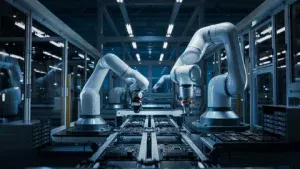
The AI factory runs on almost ten thousand advanced GPUs. It delivers massive computing strength for complex AI tasks. Telekom says the system could support AI assistants for hundreds of millions of users at the same time.
A unified platform called the Deutschland stack combines cloud services, software and AI tools. This makes it easier for companies and public institutions to use the technology.
Industrial Use and Business Impact
Industrial companies are already testing the system. Siemens is using it to speed up simulations and reduce design time. Faster simulations help companies develop products quickly and at lower cost.
Startups and research teams can also access powerful computing that was once limited to large corporations. This can help small innovators compete and grow.
Sustainability and Environmental Focus
The AI factory runs fully on renewable energy. It uses river water for cooling instead of energy heavy systems.
Waste heat from the data center will help warm nearby parts of Munich. These steps show that large scale AI infrastructure can grow while still caring for the environment and local communities.

Read
Germany’s AI factory reflects Europe’s push to create its own strong technology ecosystem. The project combines political vision with private investment.
It aims to protect data, support innovation and strengthen local industry. By focusing on real world industrial uses, the initiative connects AI development with economic growth.
Analysis
The launch shows that Europe is moving from ideas to real infrastructure. Germany is focusing on industrial AI because it already leads in manufacturing. That gives the project a practical advantage.
At the same time, the system still depends on global hardware suppliers, which means full independence will take time. Long term success will depend on strong adoption by companies across Europe.
 Recommendations
European leaders should expand shared AI infrastructure so more countries and industries can benefit. Training programs are needed to help workers learn AI skills.
Partnerships between universities, startups and large companies will keep innovation active. Clear data rules can also help build public trust and encourage wider use.
Way Forward
The Industrial AI Cloud could become a model for future European AI projects. Expanding access to smaller businesses and research teams will increase its impact.
Continued investment in sustainability and energy efficiency will be important as more data centers are built. If Europe balances innovation, privacy and environmental care, it can create a strong and competitive AI ecosystem.