
Orbán Claims Ukraine Is Interfering in Hungary’s Election
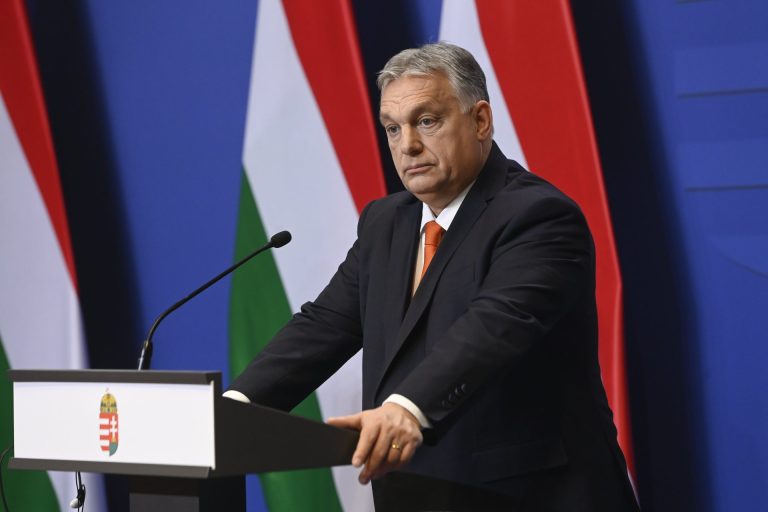
Hungarian Prime Minister Viktor Orbán has accused Ukraine of attempting to interfere in Hungary’s upcoming parliamentary election, further escalating tensions between Budapest and Kyiv as the campaign enters its final phase.
On Monday, Orbán said Hungary’s national security services had identified what he described as a coordinated Ukrainian effort to influence the vote, scheduled for 12 April, and ordered the Ukrainian ambassador to be summoned to the foreign ministry.
“Our national security services have evaluated this latest Ukrainian attack and determined that what happened is part of a coordinated series of Ukrainian measures to interfere in the Hungarian elections,” Orbán said.
Election Campaign Marked by Anti-Ukraine Rhetoric
The allegations form part of Orbán’s long-running and increasingly aggressive campaign against Ukraine, which he has portrayed as a direct threat to Hungary’s sovereignty and security.
As elections approach, Orbán has repeatedly warned voters that a change of government could draw Hungary into the war between Ukraine and Russia. He has claimed without providing evidence that Hungarians could be forcibly conscripted to fight on the front lines if his ruling party loses power.
The prime minister did not specify which Ukrainian actions or statements allegedly constituted election interference.
Rising Political Pressure on Orbán
Orbán, who has ruled Hungary for 16 years, is facing what many analysts describe as his toughest electoral challenge yet. Opinion polls suggest his right-wing nationalist Fidesz party is trailing by double digits.
He has accused his main political rival, opposition leader Péter Magyar, of working with Kyiv to unseat his government and install a pro-Western administration. No evidence has been presented to support the claim.
Hungary’s Russia Ties and EU Tensions
Since Russia’s full-scale invasion of Ukraine in 2022, Orbán has maintained close political and economic ties with Moscow, frequently clashing with European Union partners over sanctions, military aid to Ukraine, and broader EU foreign policy.
Hungary has repeatedly delayed or blocked EU initiatives in support of Kyiv, making it an outlier within the bloc and drawing criticism from other member states.
Diplomatic Fallout
By summoning Ukraine’s ambassador, Hungary has taken a formal diplomatic step that signals a further deterioration in already strained relations with Kyiv. The move is also likely to deepen tensions between Budapest and its EU partners, many of whom have warned against using national security narratives for domestic political gain.
As Hungary heads toward election day, Orbán’s framing of Ukraine as an external threat appears set to remain a central pillar of his campaign strategy.
Conclusion
With Hungary’s election looming, Viktor Orbán’s accusations against Ukraine mark a significant escalation in an already heated campaign. By framing Kyiv as a foreign actor seeking to influence domestic politics, Orbán is reinforcing a broader narrative that portrays external threats as a risk to Hungary’s sovereignty and security.
Whether the claims of election interference will resonate with voters remains uncertain, but the diplomatic consequences are immediate. Summoning Ukraine’s ambassador further strains relations with Kyiv and risks isolating Hungary within the European Union at a time of heightened regional instability.
As election day approaches, Orbán’s reliance on national security rhetoric underscores the high political stakes not only for his government’s future, but for Hungary’s position in Europe and its relationship with both Ukraine and its Western allies.