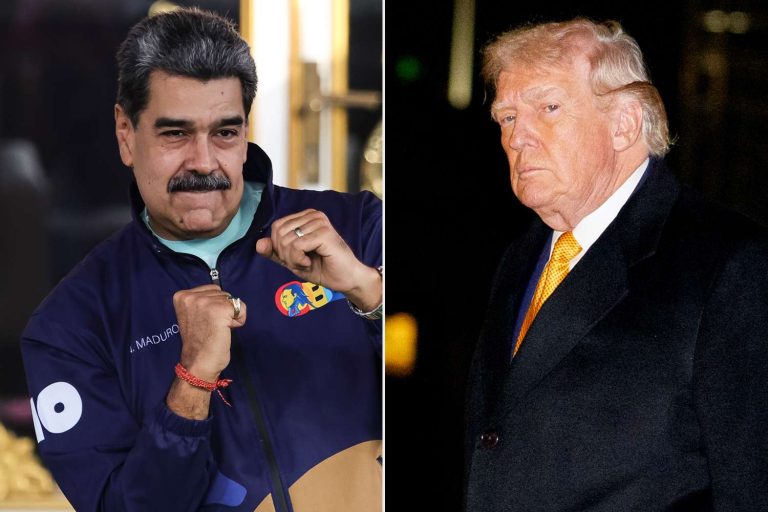

Before taking office, Donald Trump repeatedly criticized the George W. Bush administration for deciding to go to war in Iraq for many years.
Nevertheless, he is currently leading a military disaster that is very similar to Bush’s during his second term in office.
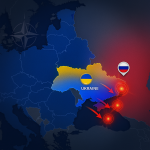
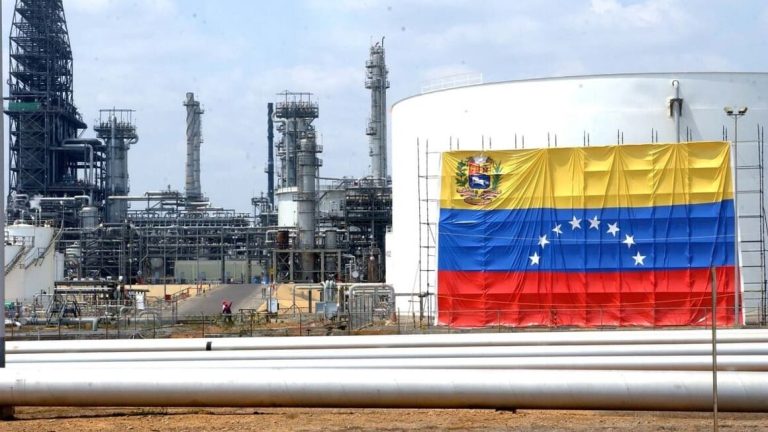
Based on a tenuous claim of national security, Trump ordered a military intervention to overthrow an unfriendly foreign leader in order to get access to that nation’s oil.
We observe a mistaken belief that the United States can easily accomplish its objectives through regime change in both situations.
The same arrogance that underlay the invasion of Iraq twenty years ago is evident in the US intervention in Venezuela.
However, there are also significant distinctions to take into account. The absence of a comprehensive vision is the primary characteristic that sets the operation in Venezuela apart.
After Trump and his secretaries of state and defense concluded an hour-long press conference on Saturday, it was unclear whether or not there was a plan in place for Venezuela moving forward.
There was also no clarity in his threats of more strikes in the coming days.
The current US commander-in-chief’s broader ideological goals align with previous examples of US-led regime change.
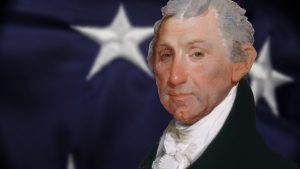
President James Monroe forbade European colonization of the Western Hemisphere in 1823. The Monroe Doctrine would support a number of US interventions in Latin America and the Caribbean as the US spent the 20th century expanding its sphere of influence throughout the Americas.
The Cold War gave the United States new reasons to topple communist governments in the Americas and establish sympathetic ones.
President George H.W. Bush aimed to maintain a “new world order” in which the United States was the only superpower in the globe as the Cold War came to an end.
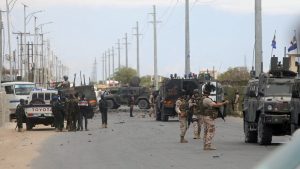
Under the guise of “humanitarian intervention,” Bush dispatched troops to Somalia in 1992, and his successor Bill Clinton overthrew a military takeover in Haiti in 1994.
The post-9/11 “war on terror” served as the justification for George W. Bush’s decision to invade Iraq.
In 2011, President Barack Obama used the “responsibility to protect” precept to guide his intervention against Muammar Gaddafi’s forces in Libya when civilians were in danger.
However, there has been no ideological rationale for the US onslaught on Venezuela.
To defend the attack, Trump and his team have carelessly used humanitarianism, counterterrorism, and other topics.
The Monroe Doctrine was even mentioned by the president. However, he ridiculed the idea just when it appeared that he was basing his foreign policy on a broader ideology albeit one that was inherited from two centuries ago.
Trump clarified on Saturday that “the Monroe Doctrine is a big deal.” However, we have greatly outperformed it.
It is currently referred to as the Donroe Doctrine. This pun was employed by the New York Post a year ago to characterize Trump’s assertive foreign policy when he threatened to take Greenland, Canada, and the Panama Canal.
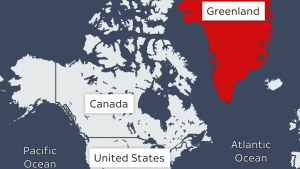
The president’s choice to adopt the playful phrase highlights a troubling aspect of his foreign policy: any idea that he is advancing an ideological agenda is absurd.
In actuality, Trump is pursuing a more aggressive and militaristic foreign policy during his second term because he has found he can get away with it rather than because he wants to impose a great vision.
Members of Trump’s base find it appealing to attack a range of foreign “bad guys” with limited ability to defend themselves, such as “Narco-terrorists” in Latin America and ISIL (ISIS) affiliates in Nigeria who are “persecuting” Christians.
During the news conference on Saturday, he made reference to the Venezuelan gang Tren de Aragua before going off topic for a few minutes to boast about his military operations in US cities.
Although the president’s failure to remain on subject may worry those who doubt his mental and physical well-being, this diversion into personal matters had some bearing on his intervention in Venezuela, at least from his perspective: His increasingly brutal battle on drugs and crime overseas serves as justification for a similarly brutal fight on drugs and crime inside.
Previous presidents have pursued a wide range of beliefs and principles by using US power. In order to defend the use of US strength, Trump seems to be giving lip service to earlier ideals.
The “good” intentions of past presidents frequently led to terrible consequences for the peoples who were subjected to US involvement.
However, those goals at least made the foreign policies of different US administrations somewhat predictable and consistent.
This article is written by Dr. Christopher Rhodes who is a lecturer in Government at Harvard University and lecturer in Social Sciences at Boston University. He is the author of the upcoming book Evangelical Violence: Christian Nationalism, the Great Commission and a Millennium of “Holy” Warfare and co-editor of the volume Conflict, Politics, and the Christian East: Assessing Contemporary Developments.