

Iran- Israel Conflict: shaping the geopolitics of Middle East
Introduction
Friends of yesterday, enemies of today. Just difference of the ideologies and change of leadership led them both to become the arch rivals of each other, in merely a half century both countries have fought multiple proxy wars, including direct aerial conflicts, Iran’s Nuclear programme and ideologies of its leadership is the key reason of their hostility which also caused deaths of thousands of people.
The situation added more to the misery of Middle East. The region is the hotbed of the wars with war torn countries like Iraq, Syria and the region of Palestine.
Historical background
Since the day Israel became a State on 14 may 1948 its relations with the Muslim world were hostile and since the then Israel has fought multiple wars with the Arab countries namely war of Independence 1948, Suez crises 1956, a war over Suez canal with Egypt, and six day war with Arabs in1967, in these wars Arab countries namely Egypt, Jordan, Syria, and Lebanon was involved while Iran partly recognised Israel.
Since its independence and maintain friendly relations with Israel during these wars, under the leadership of Mohammod Reza Pahlavi, The cooperation between Israel and Iran was of economic, Intelligence and strategic basis with the common aim of modernisation.
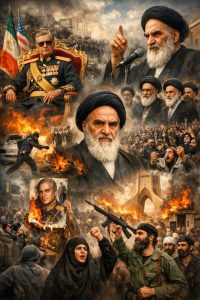
Though Pahlavi succeeded in his aim of modernising Iran, but his harsh policies like banning of Political parties, crushing dissent and left no room for opposition economic inequality led people to find a way to get rid of his authoritarian rule.
Another important driving force behind revolution was religion, the Shia clergy who historically held moral authority in Iran was now marginalized by Shah, because of their criticism on Shah’s Western policies.
Ayatollah Ruhollah Khomeini emerged as the most powerful voice of opposition. Even in exile, his sermons and messages inspired millions by framing resistance as a religious duty against tyranny and injustice.
And in this way Ayatollah Ruhollah Khomeini emerge as leader and eventually he overthrown the Authoritarian rule of Shah of Iran in 1979. (Tehrani, 1982) After the revolution, Iran’s Muslim regime severed the diplomatic ties with Israel, reject Israel’s legitimacy and close the Israeli embassy in Tehran and hand over it to PLO (Palestinian Liberation Organization).
This act formally ended diplomatic, economic and political ties between countries. Post-1979 Iran adopted a revolutionary Islamic ideology that placed opposition to Zionism at the center of its foreign policy.
Israel was framed not merely as a rival state but as a religious, moral, and political enemy. (Zigler, volume 66, issue 3 Summer 2024)(Atei, 2012)
The proxy Wars
War on Lebanon 1982
By 1982 PLO (Palestinian Liberation Organisation) amassed a considerable quantity of conventional weapons, which posed a serious threat to the civilians of northern Israel.
This development set the stage forOperation peace for Galilee, a massive armed attack across the Lebanon’s border, that commenced at 11:00 on Sunday 6 June 1982, the objectives of this military offence was articulated as Fellows:
Establishment of 25 miles buffer zone to protect Israeli civilians from PLO’s attacks.
The Invasion was so planned and coordinated that by 14 June Beirut was totally encircled by IDF soldiers and PLO fighters had flown Tunisia, Shite population of Lebanon felt so unprotected because Traditional Lebanese forces had failed to protect them.
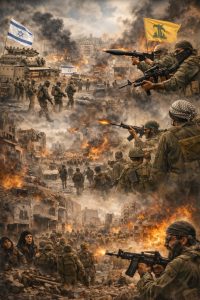
The war whose aim was to stabilise Lebanon led to destabilization of the country, that was the point when Iran sent their Military advisors in Beqa valley Lebanon to train Shia militant fighters a group which led to the formation of Hezbollah, since then Guerrilla warfare started between Hezbollah and IDF (Israeli Defence forces). (Israel)
Israel’s Withdraw from Lebanon in 2000
The war of 1982 was designed to b a short operation. But when Israel began to unravelling the entire script of its mission’s, this episode was just the beginning of 18 years saga in Lebanon.
By 1985 Israel made a partial withdraw from Lebanon but maintain its control over a piece of land in South know the Security Zone, the zone was controlled by IDF and South Lebanon Army (SLA) a local proxy militia, Hezbollah’s consistent resistance and attacks disintegrated SLA, and force Israeli Army to withdraw from Lebanon, some of SLA’s members flew to Israel and others surrendered to the Lebanese authority.
War 2006
Actually after the Israeli withdrawal from northern Lebanon in 2000, a vacuum of power created in northern Lebanon, which was then filled by Hezbollah, Israel considered Hezbollah as Iran’s militant proxy while Hezbollah claim itself as sole resistance force of Lebanon.
On July 12, 2006, two IDF soldiers were kidnapped and eight killed in a Hezbollah border attack. The resulting war would turn out to be Israel’s longest since 1948, putting an end to the six-year period of relative quiet along the Lebanese border.
Israel initiated its full assault against Lebanon and target Beirut, and northern Lebanon first with aerial strikes then with ground forces. On the other hand Hezbollah’s strategy was to fire rockets on northern part of Israel. The war lasted for 34 days and both sides bear heavy infrastructure destruction.
Cease fire brokered with the United Nations security council’s resolution 1701. And Lebanese army deployed in the region. (Section, 2000)
Syrian civil war
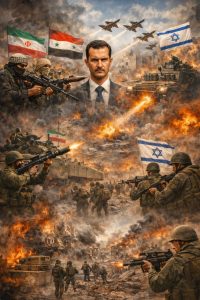
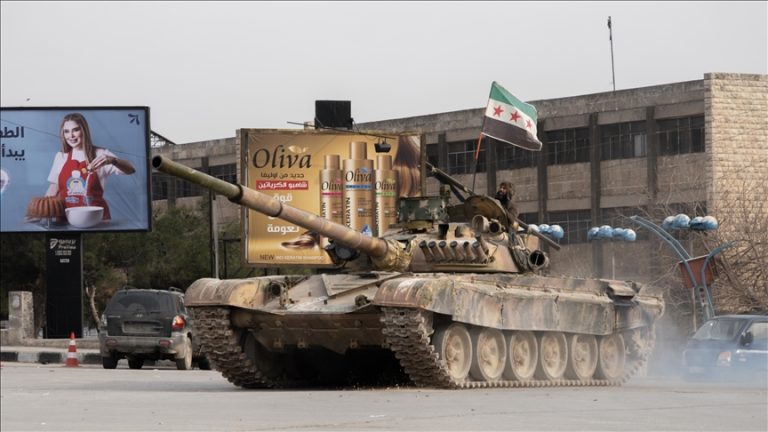
In 2011 civil war broke out in Syria against Assad’s regime, which was Iran’s key ally. Iran deployed Hezbollah fighters for the help of Syrian forces against Assad’s enemies.
Iran supplied huge quantity of conventional weaponry to Syrian forces, Israel while seeing this unrest as threat to its territory target Iranian bases, weapons convoys in Syria.
In this way Syria became main battle filed between Israel and Iran. (Dr Aniseh Bassri Tabrizi) (Oluwaseyi Emmanuel Ogunnowo1, 2020)
Iran-Israel conflict from 2023-2025
After the Gaza war began on 7 October 2023, tensions between Iran and Israel increased sharply as Iran supported Hamas and its proxies with funding and weapons, while Israel targeted Iranian positions throughout the region.
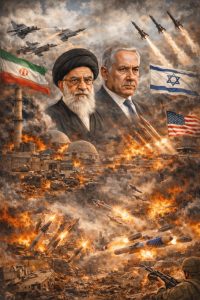
Throughout 2024, both sides conducted airstrikes: Israel bombed Iranian targets in October 2024, and Iran responded with missile barrages against Israeli bases and infrastructure, marking a shift toward more direct confrontation.
In June 2025, the conflict peaked when Israel launched a major military campaign inside Iran, striking nuclear, missile, and military infrastructure beginning on 13 June, prompting Iran to fire ballistic missiles and drones at Israel.
The United States entered the conflict on 22 June 2025 with Operation Midnight Hammer, using aircraft and cruise missiles to attack three Iranian nuclear sites at For Dow, Natant, and Isfahan in an effort to significantly delay Tehran’s nuclear program.
These strikes represented the first major U.S. military action on Iranian soil in decades and marked a major escalation. (Ambreen Aman, 2025 )
Conclusion
Since both the countries indulged in fighting for almost half century just to dominate the region, but Israel’s rising aggression like its recent attack on Doha, Qatar, spread fear in the atmosphere of Middle East, with the search of such powers that could give them protection against Israeli aggression, e.g. Pak-Saudi defence pact, Qatar-America defence pact. Notably Arab countries no more considered Iran as threat to their sovereignty but Israel.
Israel Israel’s policy of Aggression to Arab countries, also putting America’s relations with Arab allies in vulnerable position. Which will ultimately pave the way for powers like China to fulfil the protection power vacuum in Middle East.
More over Israel’s aggressive policies can compel the countries like Iran to pursue the path of becoming nuclear power more rapidly, which could be disastrous for the region.
Economic causes of the rivalry are also not less, Iran’s threat of blocking Strait of Hormuz can force countries to change the shipping route, which can alienate the region.
Balance of Power in the region has shifted due to aggressiveness of Israel which can prompt counter aggression or alliance from countries like Saudi-Arabia, Turkey. And could led to creation of more proxies which led to more destruction and casualties of civilian.
About Author:
Author is the Student of International Relations, at International Islamic University Islamabad, with the research focused on Middle East and South Asia.





One Response