
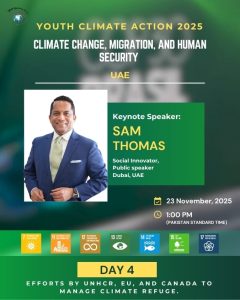
Prof. Sam Thomas on Climate Mobility, Human Security, and Building Resilient Futures
Opening Frame: Charting Our Path Forward
Prof. Sam Thomas opened the session by emphasizing the urgent need to build a resilient future in a rapidly warming world. He noted that climate change is shaping migration trends, human security, and development choices, calling for forward-looking, solution-oriented approaches.
Global Climate Data Snapshot
To establish context, he presented key global indicators:
These figures illustrate the scale of climate mobility and the growing pressure on communities worldwide.
Climate Change Inspiring Resilience & Adaptive Movement
Prof. Thomas highlighted that climate challenges are also prompting adaptive movement and new forms of resilience. Communities respond through safer relocation, diversified livelihoods, disaster preparedness, and innovative local solutions. Climate migration, when supported, can open pathways to safety and opportunity.
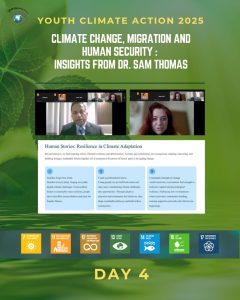
Building Resilience: A Holistic Human Security Approach
The speaker stressed that human security must be addressed through multiple interconnected dimensions:
Economic Security: climate-resilient jobs, livelihood support
Food Security: sustainable agriculture, improved resource management
Health Security: protection from climate-induced diseases and heat stress
Community Security: strong social networks and safe relocation pathways
Environmental Security: ecosystem protection and risk reduction
A holistic approach, he emphasized, strengthens long-term community stability.
Empowering Climate Migration – Building Brighter Futures
Prof. Thomas underscored the importance of viewing climate migrants as contributors, not burdens. He highlighted the need for skills training, inclusive policies, green job opportunities, and safe, dignified migration pathways that allow displaced communities to rebuild their futures.
Human Stories of Resilience
To humanize the issue, several examples were discussed:
These narratives reflect the adaptive spirit shaping climate-affected societies.
Youth as Catalysts for Transformative Climate Solutions
A major portion focused on youth leadership. Prof. Thomas emphasized that young people are:
Youth, he noted, play a critical role in amplifying, innovating, building, and transforming the climate response.
UN SDGs and a Resilient Future
The discussion connected climate mobility and resilience to key SDGs:
The speaker stressed that global partnerships, youth innovation, and international investment are essential for shaping a safer climate future.
Policy Pathways: Unlocking Climate Solutions
Prof. Thomas outlined policy directions necessary for climate-resilient development:
Policy efforts must empower people, reduce risks, and expand sustainable choices.
Closing Thoughts: Your Voice Matters
He concluded by reminding participants that:
Today’s choices will shape tomorrow’s climate realities
Hope, backed by action, ignites change
He encouraged everyone to participate actively in shaping a resilient and equitable future.