
COP30 Brazil: Why It Matters for Climate Action
Why is COP30 important for climate change and what does it entail?
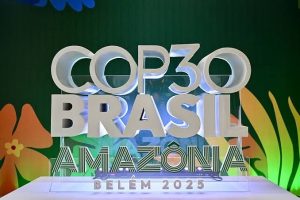
The annual assembly of nations to address climate change is taking place in Belém, Brazil. Ten years after the Paris Climate Agreement, wherein nations committed to limiting global warming to 1.5C, COP30 is taking place.
However, many world leaders are not present at the negotiations, and the head of the United Nations (UN) claims that “overshooting” 1.5C is now unavoidable.
What does COP30 stand for, and what is it?
The 30th annual UN climate meeting is called COP30. The acronym for “Conference of the Parties” is COP. “Parties” refers to the approximately 200 nations that have ratified the 1992 original United Nations climate pact.
For what reason is Brazil hosting COP30?
Following a nomination from the host region, participating nations select the host nation. Brazil is hosting the conference for the first time.
Choosing Belém, which is located in the Amazon rainforest, has presented many difficulties. There are worries that poorer countries may be priced out because some delegations have had trouble finding reasonably priced lodging.
The choice to remove a portion of the Amazon rainforest in order to construct a route for the summit has also generated controversy. Additionally, Brazil has kept issuing new licenses for fossil fuels like coal and oil and gas, which are the primary contributors to global warming.
Who is present at COP30 and who is not?
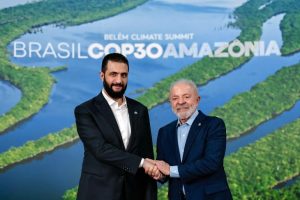
Among the leaders who attended the meeting were Brazilian President Luiz Inácio Lula da Silva, French President Emmanuel Macron, and UK Prime Minister Sir Keir Starmer. Ursula von der Leyen, president of the European Commission, and António Guterres, secretary general of the United Nations, were also present.
Speaking on behalf of King Charles, the Prince of Wales urged nations to band together to address the “fast-approaching” dangers of future climate change.
However, a number of prominent figures, such as US President Donald Trump and Chinese President Xi Jinping, were not present. The two largest emitters of gases that cause global warming are China and the United States.
When the real negotiations begin on Monday, November 10, delegations from nations all over the world, including China, are anticipated. However, the US government has stated that no senior officials will be sent. Scientists, activists, and journalists will join politicians and diplomats.
The huge number of attendees with ties to the coal, oil, and gas sectors at previous summits has drawn criticism. This, according to campaigners, demonstrates the continued power of proponents of fossil fuels.
What is the Paris Agreement, and why is COP30 significant?
With global climate targets under pressure, COP30 is taking place at a critical juncture. Nearly 200 nations decided in Paris in 2015 to strive to keep global temperature increases “well below” 2C and to keep them to 1.5C above “pre-industrial” levels.
There is compelling scientific evidence that the effects of climate change, ranging from high heat to sea level rise, will be significantly more severe at 2C than at 1.5C.
Although the use of renewable energy, especially solar power, is expanding quickly, nations’ climate plans do not meet the 1.5C target.Countries were expected to submit revised plans outlining how they will reduce their emissions of planet-warming gases prior to COP30.
But by the end of October, only one-third had done so. Given how close the target is and how high emissions are still, UN Secretary General António Guterres issued a warning that “overshooting” 1.5C is unavoidable.
However, he expressed hope that by the end of the century, temperatures may still be lowered to the desired level. The UN anticipates that COP30 will show a greater dedication to the Paris process.
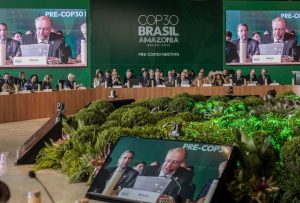
What topics will be covered at COP30?
Brazil wants to reach a consensus on how to fulfil promises made at earlier COPs. A number of topics could be discussed, in addition to nations’ new carbon-cutting initiatives. Fossil fuels The necessity to “transition away from fossil fuels in energy systems” was first acknowledged by nations at COP28 in 2023.
However, as many had hoped, that language was not reinforced at COP29 in 2024. Cash Richer nations pledged at COP29 to provide developing countries with at least $300 billion (about £229 billion) annually by 2035 to address climate change.
However, that is much less than what poorer nations claim they require.The goal of increasing this to $1.3 trillion from both public and private sources was also mentioned in that agreement.
Brazil released a “roadmap” outlining how the $1.3 trillion target could be met prior to COP30. Renewable resources Countries decided at COP28 to triple the world’s capacity for renewable energy sources, like solar and wind, by 2030.
The International Energy Agency claims that although renewable energy is expected to increase quickly, the world is not on schedule to reach that target. The natural world Brazil introduced the “Tropical Forests Forever Facility” at the leaders’ summit.
This fund aims to gather $125 billion (£95 billion) to attempt and stop the destruction of tropical forests. However, the UK stated that while it would encourage private sector investment, it would not be allocating public funds.
Will COP30 have any impact?
It appears difficult to make significant progress this year, in part due to the Trump administration’s influence.
The US President erroneously challenged the overwhelming body of scientific data supporting rising temperatures and called climate change the “greatest con job ever perpetrated on the world” in a September speech to the UN.
Additionally, he has promised to reverse green policies implemented by his predecessors, increase oil and gas exploration, and withdraw from the Paris climate pact.
Other environmental negotiations in 2025 have found it challenging to come to an agreement, as seen by the August collapse of the first global plastics pact.
Due to pressure from the US and certain other nations, a historic agreement to reduce global shipping emissions was postponed in October.
Previous COPs have been accused by some observers, like activist Greta Thunberg, of “greenwashing”—allowing nations and corporations to tout their climate credentials without actually implementing the necessary adjustments.
However, important international agreements have been struck during COP conferences, enabling more advancement than would be possible with only national actions.
The UN claims that the promise has spurred “near-universal climate action” despite the challenges of meeting the 1.5C temperature target. Even though the globe is still not moving at the rate required to meet the Paris goals, this has helped reduce the amount of predicted heat.