
How Youth Diplomacy is Driving Climate Action Worldwide
Youth Diplomacy Driving Climate Action:
Empowering the Next Generation of Change Makers
Introduction
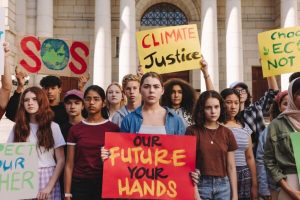
The climate crisis is no longer a distant threat; it is reshaping lives today. For the younger generation, the stakes are especially high. Yet alongside this burden lies an opportunity: youth have emerged not just as victims of climate change but as active diplomacy actors and innovators of climate action.
This article explores how youth diplomacy is transforming climate governance and why platforms like the Youth Diplomacy Forum (YDF) are central to enabling this shift.
Why Youth Matter in Climate Diplomacy
According to the United Nations, young people are not only victims of climate change; they are also valuable contributors to climate action.
A global survey by UN CC:Learn (2022–23) gathered responses from 6,458 young people across 178 countries. It found that youth want to apply knowledge and abilities to practical climate mitigation and adaptation efforts.
Youth bring distinct strengths: they are digitally native, networked globally, willing to challenge the status quo, and often live in regions most vulnerable to climate change. Youth activism helped push the inclusion of “Action for Climate Empowerment” in major negotiations.
Current Landscape: Youth in Climate Diplomacy
Global Frameworks and Youth Engagement
The UN Framework Convention on Climate Change (UNFCCC) published a youth climate engagement report in 2023–24, highlighting youth capacity building, negotiation skills, and inclusion in the process.
The UNDP’s Elevating Meaningful Youth Engagement for Climate Action report emphasizes that youth inclusion must involve genuine roles in Nationally Determined Contributions (NDCs), climate budgets, and implementation.
Barriers to Meaningful Participation
A 2024 study, Youth Participation in Climate Diplomacy: Barriers, Regional Disparities and Policy Impact, found that 72 percent of youth delegates reported financial constraints when participating in major climate negotiations. It also identified “youth washing,” where young delegates were present but lacked real influence.
Regional disparities remain significant: youth from Africa and Latin America face more structural barriers than those from Europe and Asia, even though they are among the most climate vulnerable.
The Role of Youth Diplomacy: Youth as Diplomats and Brokers
Youth diplomacy in the context of climate action involves young people acting as intermediaries between communities, governments, and international bodies. They help translate local climate realities into global policy language and bring global commitments back to local implementation.
Key roles include:
Advocacy and negotiation: Youth delegates participate in COPs, interagency dialogues, and national policy forums.
Innovation and entrepreneurship: Youth-led climate solutions, start-ups, and social enterprises influence policy.
Peer education and mobilisation: Youth amplify awareness, training, and community action.
Bridge between traditional and digital diplomacy: They use social media, cross-border networks, and digital tools to modernize diplomacy.
A December 2023 Diplomatic Courier article noted that while most youth engagement was at the global level, achieving sustainability transformation requires stronger participation at national and local levels.
Youth Diplomacy and Climate Action: Case Studies and Regional Focus
Global Overview
The UNESCO-led YUCAN (Youth Climate Action Network) supports thousands of young people globally by creating spaces for youth-led initiatives, dialogue between youth and policymakers, and capacity building.
The UNFCCC youth engagement survey shows strong digital participation: among respondents from 178 countries, 49 percent were female, and 85 percent accessed via mobile devices, showing both inclusivity and digital potential.
Regional Relevance for Pakistan and Neighboring Regions
For a platform like YDF, connecting Pakistan’s youth with regional diplomacy in the GCC and Central Asia means focusing on shared vulnerabilities such as water scarcity, heat stress, migration, and energy transition.
Youth from Pakistan and the wider South and East Asia region form a crucial part of the global youth cohort whose voices are essential in implementing NDCs and adaptation plans, especially given their high vulnerability to climate impacts.
Challenges and Recommendations for Effective Youth Diplomacy in Climate Action
Challenges
Tokenism: Youth participation can be symbolic, lacking real decision-making power.
Resource constraints: Young delegates often lack funding, training, and institutional support.
Limited capacity: Many youth need negotiation and policy-writing training.
Regional inequities: Youth from the Global South face more barriers despite being most affected.
Recommendations
Build youth advisory boards within national climate agencies with policy influence.
Enhance capacity-building programmes through negotiation, climate science, and digital diplomacy training.
Provide funding and travel support for youth from resource-constrained regions.
Promote peer networking and South–South youth exchanges, connecting youth across Pakistan, Central Asia, and the GCC.
Integrate youth voices in NDC processes through consultations, youth-led research, and representation.
Use digital storytelling and campaigns to communicate climate diplomacy effectively.
Why YDF Should Be at the Forefront
As a youth-led diplomacy platform connecting Pakistan with the GCC, Central Asia, and beyond, YDF is uniquely positioned to:
Facilitate youth diplomacy dialogues on climate action.
Serve as a capacity builder for emerging youth leaders through mentorship and networking.
Produce research-based content amplifying youth perspectives in major climate forums.
Connect grassroots youth action with high-level diplomacy and embassy engagement.
Leverage its regional position to unify youth agendas on desertification, water security, and renewable energy.
Conclusion
Youth diplomacy is central to effective climate action. When young people engage meaningfully in negotiations, policy design, and implementation, climate governance becomes more inclusive and innovative. Achieving this requires investment in training, funding, and institutional access.
Platforms such as YDF provide the bridge for youth to lead in climate and diplomatic spaces across Pakistan, the Gulf, and Central Asia. The climate crisis demands full youth engagement as negotiators, advocates, thinkers, and change makers.
Sources: United Nations, UNDP, UNFCCC, UNESCO